
Color-changing clothing can look like magic, but the trigger behind the change matters. A shirt can respond to heat, water, or ultraviolet light, and those technologies behave very differently in everyday wear.

If you have been searching for photochromic clothing, thermochromic clothing, hydrochromic clothing, or shirts that change color in the sun, the easiest way to understand the difference is to start with what activates the color change.
- Thermochromic responds to temperature.
- Hydrochromic responds to water or moisture.
- Photochromic responds to light, especially UV light.
None of these technologies is automatically “better” for every use. The right one depends on the experience you want the garment to create.
Thermochromic: Color Change Triggered by Heat
Thermochromic materials change color when their temperature changes. Depending on the formulation, a garment may react to body heat, warm hands, hot objects, or changes in the surrounding temperature.
This is the technology behind many classic heat-sensitive color-changing products. It can create a dramatic reveal, especially when a warm hand touches the fabric.
The trade-off is that temperature is not always a precise or visually predictable trigger. A shirt can respond to heat from your body or the surrounding environment, which means the effect is tied to temperature rather than a specific outdoor moment.
Modern thermochromic textiles continue to be researched for fashion and smart-textile applications, but stability, wash durability, and sensitivity remain important design considerations.
Hydrochromic: Color Change Triggered by Water
Hydrochromic materials respond to water or moisture. In clothing and textiles, the effect can be used to reveal or hide colors and patterns when the material becomes wet.
That makes hydrochromic clothing particularly interesting for products designed around rain, water, swimming, or playful visual effects.
The experience is fundamentally different from a sun-activated shirt. The trigger is moisture, not sunlight. Once the material dries, the appearance can move back toward its original state depending on the specific formulation.
Photochromic: Color Change Triggered by UV Light
Photochromic materials change color reversibly when exposed to light of an appropriate wavelength, commonly ultraviolet light. This is the same broad phenomenon that makes photochromic lenses darken outdoors and return toward their clearer state away from UV exposure.
For clothing, that creates a very different kind of experience: the garment can look understated indoors or in shade, then reveal additional color when you step outside.
Photochromic textiles have been studied for clothing and other textile applications for years. Their performance depends on the material formulation, UV intensity, exposure time, temperature, and how the photochromic system is integrated into the textile.
That last point matters. A photochromic effect is not simply “paint that changes color.” The way the color-changing material is incorporated into a textile affects how the final garment looks and behaves.
Thermochromic vs Hydrochromic: What's the Difference?
The simplest answer is the trigger.
- Thermochromic = heat.
- Hydrochromic = water.
- Photochromic = UV light.
If you want a shirt that reacts when you touch it or its temperature changes, thermochromic technology makes sense.
If you want a garment designed around rain or water, hydrochromic technology can create a fun visual effect.
If you want the garment to respond to being outside in sunlight, photochromic is the natural fit.
For that reason, photochromic clothing is especially interesting for summer fashion, outdoor styling, festivals, travel, and any moment where the transition from indoors to outdoors becomes part of the experience.
Photochromic vs Thermochromic vs Hydrochromic Clothing
All three technologies can create color-changing effects, but they create very different experiences.
Thermochromic Clothing
The color responds to temperature. The experience is based on heat, which can come from the wearer or the surrounding environment.
Best suited to: heat-sensitive novelty products, interactive designs, temperature indicators, and experimental fashion.
Hydrochromic Clothing
The color responds to water or moisture, making the effect especially relevant to products designed around rain, water, or wet environments.
Best suited to: water-related products, playful fashion, swimwear concepts, and visual effects triggered by moisture.
Photochromic Clothing
The color responds to UV light. This makes it particularly interesting for clothing designed around outdoor life, sunlight, and the transition between indoor and outdoor environments.
Best suited to: sun-activated shirts, outdoor fashion, festival outfits, travel, and wearable designs that reveal an additional visual layer in daylight.
Why Photochromic Clothing Feels Different
The most interesting part of photochromic clothing is not simply that the color changes. It is that the change can be designed as part of the artwork.
A designer can decide which areas remain stable and which areas respond to UV light. That means the garment does not have to become a completely different color. It can reveal a second layer of the same design.
That is the idea behind SunnySass Sunlit Peaks.
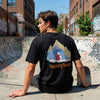
The shirt is already finished before the sunlight reveal. The embroidery creates the texture, landscape, and visual story first. Selected mountain peak details use UV-reactive thread, so sunlight reveals a soft golden tone in those areas.
The effect is intentionally selective: the entire graphic does not change at once. The stable embroidery stays in place while the reactive details become visible.
The embroidery is always there. The sunlight simply reveals more of it.

How Sunlit Peaks Works in Real Life
In indoor light or shade, the selected mountain details remain pale and understated.
Under sufficient UV exposure, those areas gradually reveal a soft golden tone.
As UV exposure decreases, the reactive color gradually returns toward its lighter appearance.
The strength and speed of the reveal are not fixed. They can change with UV intensity, exposure time, weather, season, time of day, and surrounding conditions.
The white and black versions also create different visual moods. The white tee gives the clearest contrast, while the darker base makes the same reveal feel more subtle.
This is why we describe Sunlit Peaks as one design with two moods.

What Is the Difference Between Photochromic and UV-Reactive Clothing?
In everyday product language, these terms are often used together.
Photochromic describes the underlying light-responsive color-changing technology.
UV-reactive describes the fact that the material responds to ultraviolet light.
For a garment like Sunlit Peaks, “UV-reactive embroidered tee” is a useful customer-facing description because it immediately explains what activates the effect. “Photochromic” is the more technical term that explains why the effect happens.
Is Photochromic Clothing Permanent?
Not in the sense that the color-changing effect is guaranteed to remain identical forever.
Photochromic performance can change over time depending on the material, how it is integrated into the textile, UV exposure, washing, heat, abrasion, and care.
That is why good care matters. For a garment with UV-reactive embroidery, gentle washing, avoiding harsh chemicals, and avoiding unnecessary prolonged UV exposure when the shirt is not being worn can help protect the reactive details.
For the most accurate care instructions, always follow the garment's own care label and manufacturer guidance.
Does Photochromic Clothing Work Indoors?
Usually, the effect is much weaker indoors because ordinary indoor lighting provides far less UV than outdoor sunlight.
The clearest reveal normally happens outdoors under bright natural light with sufficient UV exposure.
It can also vary through windows because different types of glass filter different amounts of UV.
Is Photochromic the Same as Glow-in-the-Dark?
No.
Glow-in-the-dark materials store energy and continue emitting visible light after the light source is removed.
Photochromic materials respond to light exposure and then gradually return toward their original state when the activating light is reduced.
The result is not a glowing shirt in a dark room. It is a shirt that changes as your environment changes.
Why SunnySass Chose Photochromic Embroidery
For SunnySass, the appeal of photochromic technology is not simply the color change. It is the relationship between light, craft, and everyday movement.
Traditional embroidery gives the artwork texture and depth. UV-reactive thread adds a second visual layer that only appears under the right light.
The main artwork on Sunlit Peaks is machine embroidered, while selected UV-reactive mountain details are finished by hand. This combines the consistency of modern embroidery production with a human touch where the sunlight reveal happens.
The result is simple in concept:
- The embroidery is always there.
- The sunlight reveals another layer.
- The effect becomes part of the artwork rather than an effect placed on top of it.
Final Thought
Photochromic, thermochromic, and hydrochromic clothing all use the idea of responsive color, but they create very different experiences.
Heat creates thermochromic change.
Water creates hydrochromic change.
UV light creates photochromic change.
If your goal is a shirt that becomes part of the outdoor moment, photochromic technology offers something special: the garment can remain quiet in the shade and reveal another layer when sunlight finds it.
That is the little piece of sunshine magic we wanted to build into SunnySass.
Blog posts
-
, by Author Article title
-
, by Author Article title
-
, by Author Article title